
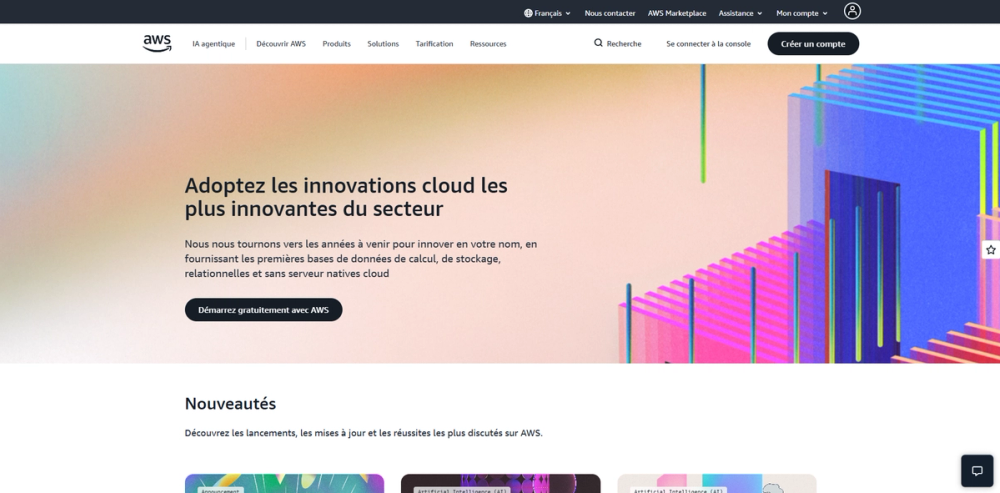
AWS – The Best Cloud Infrastructure Platform for Startups
Building scalable applications is one of the biggest challenges for startups and developers. Managing servers, databases, storage, networking, security, and scaling infrastructure manually can quickly become expensive, time-consuming, and difficult to maintain as products grow.
That’s where AWS delivers a major advantage.
AWS (Amazon Web Services) is one of the world’s leading cloud computing platforms, offering reliable, scalable, and cost-effective infrastructure for startups, agencies, and developers. From hosting websites and SaaS applications to running AI workloads and enterprise systems, AWS provides the tools needed to build and scale modern digital products efficiently.
What is AWS?
AWS is a cloud computing platform developed by Amazon that provides on-demand access to computing power, storage, databases, networking, security, machine learning services, and backend infrastructure through the cloud.
Instead of purchasing and maintaining physical servers, businesses can use AWS to deploy applications globally with flexible, pay-as-you-go infrastructure. This allows startups to scale resources dynamically based on traffic and usage without investing heavily in hardware or operations teams.
AWS offers hundreds of cloud services that support everything from simple websites and APIs to enterprise SaaS platforms, AI applications, data analytics systems, and large-scale backend infrastructures. Developers can launch servers, configure databases, deploy serverless applications, manage storage, and automate workflows using AWS’s ecosystem of services.
One of AWS’s biggest strengths is its scalability and reliability. Its global cloud infrastructure powers millions of applications and businesses worldwide, making it a trusted platform for companies ranging from startups to major enterprises.
For developers and SaaS businesses, AWS provides the flexibility to build secure, high-performance applications while maintaining control over infrastructure and scaling strategies.
Key Features
-
Scalable cloud computing infrastructure for web and mobile applications
-
Global hosting and server deployment capabilities
-
Managed databases, storage, and networking services
-
Serverless computing and backend automation tools
-
Enterprise-grade security and compliance infrastructure
-
AI, analytics, and machine learning cloud services
-
Flexible pay-as-you-go pricing for scalable growth
Use Cases
For Startups
Launch scalable SaaS products and applications without investing in expensive physical infrastructure.
For Developers
Deploy APIs, databases, cloud functions, storage systems, and backend services using flexible cloud tools.
For Agencies
Manage hosting and cloud infrastructure for client applications with scalable deployment workflows.
For SaaS Platforms
Build high-performance backend systems capable of handling global traffic, real-time workloads, and application scaling.
Pros and Cons
Pros
-
Highly scalable cloud infrastructure
-
Massive ecosystem of cloud services
-
Reliable global hosting network
-
Strong security and compliance standards
-
Flexible pricing for startups and enterprises
-
Suitable for nearly any type of application
Cons
-
Can feel complex for beginners
-
Pricing management requires careful monitoring
-
Large service ecosystem may have a learning curve
Why Choose AWS?
AWS stands out because it combines scalability, reliability, and flexibility into one of the most powerful cloud platforms available today. Instead of relying on limited hosting environments, businesses gain access to enterprise-grade infrastructure capable of supporting everything from small MVPs to large-scale SaaS ecosystems.
For startups, AWS offers the ability to launch quickly and scale gradually without upfront infrastructure investment. Developers benefit from a broad range of backend services, deployment options, and automation tools that support modern application development.
Its global infrastructure, security capabilities, and mature ecosystem also make AWS a strong long-term solution for growing businesses. Whether you are building APIs, AI platforms, mobile apps, or enterprise systems, AWS provides the flexibility needed to adapt and scale efficiently.
If your goal is to build reliable cloud-powered applications with maximum scalability and infrastructure control, AWS remains one of the best cloud platforms available.
Alternatives Comparison
Some businesses use traditional hosting providers or simplified cloud platforms for deployment and backend management. While those solutions may work for smaller projects, they often lack the scalability, infrastructure depth, and advanced cloud services required for larger applications.
AWS provides a more comprehensive cloud ecosystem designed for startups, developers, and enterprises that need flexible and production-ready infrastructure.
FAQs
What is AWS used for?
AWS is used for cloud hosting, backend infrastructure, databases, storage, APIs, AI services, and scalable application deployment.
Is AWS good for startups?
Yes. AWS helps startups launch scalable products without investing heavily in physical infrastructure or operations teams.
Does AWS support serverless applications?
Absolutely. AWS provides serverless computing services for building scalable applications without managing servers directly.
Can AWS host SaaS applications?
Yes. Many SaaS companies use AWS to host scalable backend systems, APIs, databases, and cloud services.
Is AWS secure?
Yes. AWS provides enterprise-grade security, compliance tools, encryption, and infrastructure protection features.
Does AWS offer pay-as-you-go pricing?
Yes. AWS uses flexible pricing models where businesses pay only for the resources they use.
Is AWS suitable for enterprise applications?
Yes. AWS powers infrastructure for startups, large enterprises, AI systems, and global-scale digital platforms.


